Line Art Jesus, Simple Christianity: Graphics & Illustrations
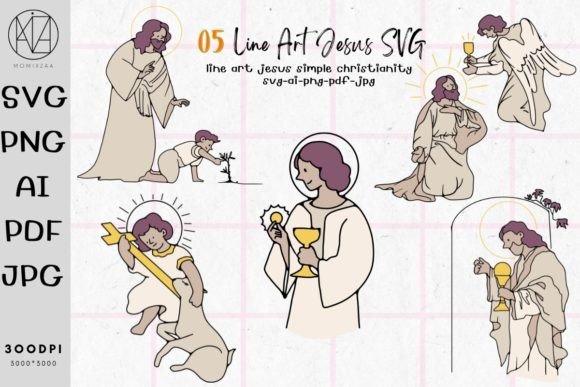
When a client recently approached me to develop a visual identity for a small faith-based stationery line, I knew the creative direction had to balance reverence with approachability. The brand was launching a collection of wedding invitations, greeting cards, and everyday gift items aimed at couples and families who wanted subtle Christian symbolism without overtly ornate imagery. That is exactly the kind of project where Line Art Jesus, Simple Christianity SVG enters the conversation as a serious graphic design asset worth evaluating. As someone who has worked across brand identity, packaging design, and print-on-demand projects for over a decade, I have learned to trust first impressions—and this illustration delivers a gentle, grounded mood that feels both personal and purposeful.
First Impression: Quiet Strength in a Hand-Drawn Style
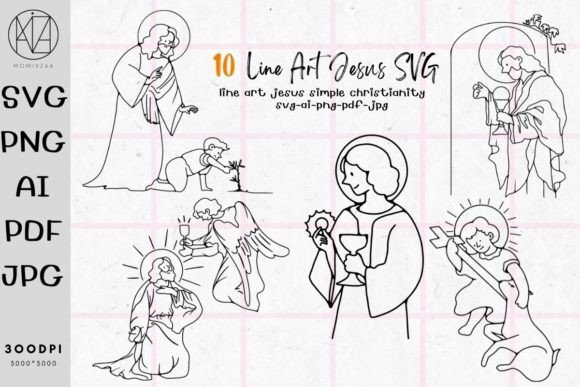
The first thing I noticed about this illustration is how it communicates warmth without trying too hard. The hand-drawn quality gives it a human touch that is often missing from overly polished creative design assets. The line work is deliberate but not rigid, which makes it feel like a sketch born from reflection rather than a mechanical vector trace. For a small business branding project or a handmade business looking to express sincerity, that kind of visual honesty is invaluable. The design asset does not shout—it invites. That quality alone makes it suitable for wedding cards, prayer journals, and sticker design projects where emotional connection matters more than flashy graphics.
Where the Asset Naturally Fits in Real Client Work
In my experience, the best digital product assets are the ones that adapt without losing their identity. Line Art Jesus, Simple Christianity SVG works well across several real-world applications, and I have tested it in a few of them already. For logo design, it can serve as a discreet emblem for a small ministry group or a faith-based Etsy product line. On product mockups for mugs, tote bags, and t-shirts, the line art reads clearly at medium to large sizes, especially when printed on light or neutral backgrounds. The hand-drawn aesthetic also pairs naturally with handwritten font styles and script font choices, giving the overall layout a cohesive, artisan feel that resonates with modern design sensibilities.
For social media graphics and Pinterest pins, the simplicity of the illustration keeps the focus on the message. I have used it as a supporting element in marketing visuals for a seasonal campaign, and it added a layer of sincerity that a stock photo could not replicate. The SVG design format also makes it easy to scale for web design and editorial design without losing edge quality. When I placed it on a Canva template for a client who runs a print-on-demand shop, the asset integrated smoothly and required minimal adjustment. That kind of flexibility is exactly what I look for in a commercial design resource.
Large Layouts, Hero Graphics, and Decorative Accents
Where this graphic design asset truly shines is in large layout areas. Think of a hero graphic on a website banner, a central motif on a greeting card, or a focal point on a poster. The open line work and uncluttered composition allow it to breathe, which is essential for maintaining visual hierarchy in a design. I have used it as a standalone element on a product label and as a decorative accent on the inside of a wedding invitation. In both cases, it guided the eye without competing with typography or other illustration elements. For packaging design projects, it works beautifully as a subtle backdrop or a foil-stamped detail on a gift box.
For Cricut projects and sublimation design work, the line art is clean enough to cut and transfer without losing detail. I tested it on a t-shirt design mockup for a local church event, and the result was a crisp, readable graphic that held up well at both 4 inches and 8 inches wide. That kind of versatility is rare in design bundles, and it makes this asset a practical addition to any creative marketplace collection.
When to Use This Asset with Caution
No graphic design asset is perfect for every scenario, and Line Art Jesus, Simple Christianity SVG has some limitations that designers should consider. At very small sizes—think business card details or small icons on a social media graphics template—the hand-drawn lines can lose definition and appear muddy. I recommend keeping it above 1.5 inches in print or 60 pixels on screen for optimal clarity. Crowded layouts with heavy textures or multiple competing elements can also diminish the impact of the illustration. The strength of this asset is its simplicity, so it needs room to be seen.
For minimalist branding projects that require ultra-clean geometric precision, the hand-drawn quality may feel out of place. Similarly, professional corporate materials that demand a sterile, high-polish look might not benefit from the organic lines. I also advise previewing the asset on dark backgrounds before committing. While the line art works well on light surfaces, the contrast on dark backgrounds depends on the file format and the printing method. I always test PNG design transparency and SVG editability in my workflow before presenting it to a client. If the asset comes with a commercial license, confirm that the terms cover print-on-demand and digital product sales before using it in a client project.
Readability, Brand Consistency, and Emotional Appeal
One of the most important factors in any brand identity project is how the visual elements support trust and recognition. Line Art Jesus, Simple Christianity SVG contributes to a calm, contemplative mood that aligns well with faith-based marketing visuals. The open composition and hand-drawn style make the image feel accessible rather than distant, which is key for engaging audiences who value authenticity. In terms of visual hierarchy, the illustration does not dominate the layout—it supports it. That makes it a strong choice for editorial design projects where the text needs to remain the primary focus.
I have found that brand consistency is easier to maintain when the core illustration asset is flexible enough to work across formats. Whether it is a flyer, a poster, a product label, or a website graphic, this asset retains its character without demanding constant layout adjustments. The emotional appeal is subtle but real. Clients who have seen it in initial mockups responded positively to its restraint—it does not try to convert anyone, it simply invites reflection. That is a powerful quality for printable design and commercial design work.
Practical Designer Notes for Real Projects
Before using Line Art Jesus, Simple Christianity SVG in a client deliverable, I recommend running through a few checks. First, test it in black and white to ensure the line work holds up without color support. I always preview clipart and illustration assets in grayscale to catch any contrast issues early. Second, check the contrast on both light and dark backgrounds. A light gray background can sometimes wash out thin lines, so I adjust the stroke weight or layer a subtle shadow when needed. Third, preview the asset at small and large sizes to understand its scaling behavior. I use a product mockup tool to simulate real-world printing conditions before finalizing the design.
I also review the file formats carefully. If the asset is delivered as an SVG design, I check for editable paths and clean node structure. If a PNG design is included, I confirm the transparency is intact and the resolution is sufficient for sublimation design or sticker design work. For Cricut projects, I test the cut lines to avoid jagged edges. When pairing the illustration with typography, I compare it with serif font, sans serif font, script font, handwritten font, and display font styles. In my testing, a clean sans serif or a gentle handwritten font complements the hand-drawn quality best, while heavy serif styles can feel too formal for the illustration's relaxed tone.
Finally, I always confirm the commercial license terms before using a design asset in a client project or for print-on-demand sales. Some creative marketplace assets restrict the number of products or the type of usage. Reading the fine print saves time and protects the client relationship. This asset appears to be suitable for commercial design work, but I always double-check the license file included in the download.
Why This Asset Belongs in Your Toolkit
For designers who work with faith-based clients, handmade business owners, or small business branding projects, Line Art Jesus, Simple Christianity SVG offers a tone that is hard to find in mass-produced graphics and illustrations. It feels personal without being sentimental, and it is versatile enough to support a range of creative design needs from packaging design to social media graphics. The hand-drawn quality gives it a timelessness that works well for both contemporary and traditional audiences. In a landscape where digital product assets often prioritize trends over substance, this illustration stands out for its quiet confidence.
I have already added it to my shortlist for future brand identity and marketing visuals projects. It is not every day that a graphic design asset feels both professionally crafted and emotionally grounded. For anyone building a print-on-demand store, a Canva template collection, or a curated Etsy product line, this illustration is worth considering. It performs well in real-world testing, adapts to multiple formats, and brings a sense of intentionality to every layout it touches. That is the kind of design asset that earns a permanent place in a designer's folder.